Sports Betting Odds Explained for Singles, Accumulators, and Live Markets

Sports Betting Odds Explained for Singles, Accumulators, and Live Markets

If you’ve ever stared at a betting slip and wondered why a 4.50 price actually matters, or why your five-fold accumulator died because one team scored in the 89th minute, this guide is for you. I’ve been punting for over a decade, and I’ve learned that odds aren’t just numbers—they’re a language. In this article, I’ll break down how decimal and fractional odds work for single bets, how accumulators multiply risk and reward, and why live markets behave completely differently. I’ll also share some hard-earned lessons on bankroll management and value betting. Whether you’re a newbie or a seasoned bettor, there’s something here to sharpen your edge.

Understanding Decimal Odds and Implied Probability for Single Bets

Decimal odds are the most straightforward way to calculate your return because they include your stake in the figure. If you see odds of 2.50, that means for every £1 you wager, you get £2.50 back if the bet wins—that’s your original £1 plus £1.50 profit. To find the implied probability, you simply divide 1 by the decimal odds. So, 1 divided by 2.50 equals 0.40, or 40%. This tells you the bookmaker believes there’s a 40% chance of that outcome occurring. The tricky part is that the bookmaker adds a margin, known as the overround, so the total implied probabilities across all outcomes in a market will exceed 100%. For example, in a football match with home win at 2.00, draw at 3.50, and away win at 3.80, the implied probabilities are 50%, 28.6%, and 26.3%, summing to 104.9%. That extra 4.9% is the bookie’s edge. When I bet singles, I always convert odds to implied probability first, because it helps me spot when a price is too low or too high relative to my own assessment.

Let me give you a concrete example from my own betting history. I once backed a mid-table Championship team at home against a relegation-threatened side. The bookmaker offered 1.85 for the home win, which implies a 54% probability. But I had watched both teams’ last five matches, and the home side had won four of them, while the away side had lost three. My own estimate was closer to 65% for a home win. That’s a clear value opportunity because the odds are paying me more than the true probability suggests. For singles, I always check if my estimated probability is at least 5% higher than the implied probability from the odds. If it is, I place the bet. If not, I walk away. This discipline has saved me from countless bad bets. Another thing I do is compare odds across three or four bookmakers because the same event can have a 0.10 difference in decimal odds, which doesn’t sound like much but adds up over a month of betting.

One mistake I see beginners make is ignoring the stake size in relation to odds. A single bet at 1.50 might seem safe, but if you stake £100, you’re only making £50 profit. Meanwhile, a bet at 3.00 with a £50 stake gives you £100 profit but requires a 33% win rate just to break even. The key is to match your stake to the confidence level you have in the bet. For strong convictions at odds above 2.00, I might stake 3% of my bankroll. For safer bets below 1.70, I’ll stake 5%. This way, even a losing streak doesn’t wipe me out. I also keep a spreadsheet of all my singles, noting the odds, stake, and my estimated probability. After 100 bets, I can see if my approach is profitable or if I need to adjust my probability estimates. That’s the real secret to long-term success—not chasing big wins, but consistently finding small edges.

How Fractional Odds Work and When to Use Them in Practice

Fractional odds are more common in the UK and Ireland, and they show your profit relative to your stake. If you see odds of 5/1, that means for every £1 you stake, you win £5 in profit, plus you get your original £1 back. So a £10 bet at 5/1 returns £60 total—£50 profit plus your £10 stake. To convert fractional odds to decimal, you just add 1 to the fraction. So 5/1 becomes 6.00 in decimal. The implied probability is calculated as the denominator divided by the sum of both numbers. For 5/1, that’s 1 divided by (5+1), which equals 16.67%. Fractional odds are handy when you’re dealing with even money or short prices, like 1/2, which means you need to stake £2 to win £1 profit. I personally use fractional odds when I’m at a UK bookmaker, but I always convert them to decimal in my head because I find it easier to compare value across different markets.

Here’s a practical scenario where fractional odds shine. Let’s say you’re betting on a tennis match where the favourite is priced at 1/4 and the underdog at 7/2. The 1/4 price implies an 80% win probability, which is very high. But if you’ve done your homework and you know the favourite has a minor injury, the true probability might be closer to 70%. In that case, the 1/4 price is terrible value, and you should either skip the bet or consider the underdog at 7/2, which implies a 22.2% probability but might have a real 30% chance. I’ve won a lot of money by backing underdogs in these situations, especially in tennis where a single bad service game can change everything. The key is to not be seduced by the big numbers. A 7/2 price looks attractive, but you need to be sure the underdog has a genuine chance, not just a hope.

When I started betting, I used to ignore fractional odds because they seemed confusing. But once I learned to convert them, I realised they’re actually better for quick mental calculations. For example, odds of 9/2 mean you get £4.50 profit for every £1 staked, which is exactly 5.50 in decimal. If I see a horse at 9/2 in a race, I immediately think, “That’s about an 18% chance.” If I think the horse has a 25% chance, that’s a bet. The same logic applies to football, where you might see a team priced at 11/4 to win a match. That’s 3.75 in decimal, implying a 26.7% probability. I always ask myself: “Is this team winning more than one in four matches in this situation?” If the answer is yes, I’m in. Fractional odds also make it easier to spot when a bookmaker is offering a promotional price, like 10/1 instead of the usual 8/1. That extra two points of profit can be the difference between a winning month and a losing one.

Accumulator Bets: The Allure of Big Multipliers and the Hidden Pitfalls

Accumulators, or accas, are the siren song of sports betting. You pick four, five, or even ten selections, and the odds multiply together. A £10 stake on a five-fold with odds of 1.50, 2.00, 1.80, 2.20, and 1.90 gives you total odds of 22.57, meaning a £10 bet returns £225.70 if all five win. That’s a tempting payout, but here’s the catch: the implied probability of all five winning is the product of each individual probability. If each selection has a 60% chance of winning, the combined probability is 0.6 multiplied by itself five times, which is just 7.8%. So your £10 bet has a less than 8% chance of winning. The bookmaker loves this because they make a massive margin on each leg. I’ve seen so many punters add a sixth or seventh selection just because the potential payout looks huge, but they’re actually reducing their chances of winning dramatically. My rule is simple: never add a leg to an accumulator unless I genuinely believe it has a 70% or higher chance of winning.

Let me tell you about a painful lesson I learned. A few years ago, I had a four-fold accumulator on a Saturday afternoon. I had picked three solid favourites and one risky bet—an away win for a team that had won only twice in their last ten away games. The odds were 3.20 for that risky leg, and the total payout was £480 from a £20 stake. All three favourites won comfortably, but the risky team lost 2-1 after being ahead at half-time. I lost £20, but more importantly, I learned that accumulators are about patience, not excitement. If I had placed that risky leg as a single bet, I would have won £64, which isn’t bad. But by including it in an acca, I turned a likely win into a loss. Now, I only build accumulators with selections that I’m confident about individually. I also cap my accumulators at four legs, because anything more than that reduces your chances to under 5%, which is basically throwing money away.

Another thing to watch out for is the “acca insurance” that many bookmakers offer. They’ll refund your stake if one leg lets you down, but only if you have five or more selections and one fails. While this sounds great, it encourages you to add more legs than you should. I’ve seen friends add a sixth leg just to qualify for insurance, only to have that sixth leg lose anyway. The insurance doesn’t make a bad bet good—it just softens the blow. My advice is to treat accumulators as a fun, occasional bet rather than your main strategy. I allocate no more than 10% of my monthly betting budget to accumulators. The rest goes to singles and value bets. If you’re going to chase a big payout, do it with a small stake that you can afford to lose completely. And always remember that a bookmaker’s odds on an accumulator are already inflated with their margin, so you’re fighting an uphill battle from the start.

Here’s a table I use to visualise how accumulator odds multiply and what the implied probability looks like. It’s a quick reference I keep on my phone.

Number of Legs Average Odds per Leg Total Odds Implied Probability
2 1.80 3.24 30.9%
3 1.80 5.83 17.1%
4 1.80 10.50 9.5%
5 1.80 18.90 5.3%

As you can see, the probability of winning drops off a cliff after three legs. That’s why I stick to doubles and trebles for serious betting. A double at 1.80 and 1.90 gives you total odds of 3.42, with a 29.2% chance of winning. That’s manageable if you’ve done your research. But a five-fold at the same odds gives you less than a 5% chance. You might as well play the lottery. So, when you’re building an accumulator, ask yourself: “Would I be happy placing each of these selections as a single bet?” If the answer is no for any of them, take that leg out. It’s the difference between a calculated risk and a punt.

Live Betting Odds: How In-Play Markets Shift and Why Timing Matters

Live betting, or in-play betting, is a completely different beast from pre-match betting. The odds change in real-time based on what’s happening on the pitch, court, or track. A team that goes 1-0 up in the 30th minute might see their odds drop from 2.50 to 1.60, while the team that’s losing might drift from 3.00 to 5.00. The key is to understand that live odds are driven by momentum, not just probability. I’ve seen a team dominate for 60 minutes but still be behind 1-0, and their odds to win are still 2.80 because the market believes they’ll eventually score. The challenge is to predict when the odds are overreacting to a single event. For example, if a favourite goes 1-0 down early, their odds might drift to 3.50 even though they still have a 60% chance of winning. That’s a value opportunity if you believe the favourite will recover.

Timing is everything in live betting. The first five minutes of a football match often see inflated odds because bookmakers are cautious about early goals. If you’ve done your pre-match research and you know a team scores early in games, you can place a bet on them to win within the first 10 minutes at odds of 1.90, which is great value. But you have to act fast because the odds will shorten as soon as they create a chance. I’ve also found that the half-time period is a golden window. Odds are frozen briefly, and if you’ve watched the first half, you’ll have a much better sense of the game’s flow than the bookmaker’s algorithm. For example, if a team has had 70% possession and 10 shots but is only drawing 0-0, their odds to win might be 2.20, but I know they’re likely to score in the second half. That’s a bet I’m happy to place.

Another important aspect of live betting is cash-out. Many bookmakers offer you the option to cash out your bet before the event ends, locking in a profit or minimising a loss. For example, if you bet £20 on a team at 2.50 pre-match, and they go 1-0 up at half-time, the cash-out value might be £32. You can take that profit and run, or you can let it ride. My rule is to cash out if the cash-out value is at least 70% of the potential winnings and I’m not confident about the remaining time. But I’ve also been burned by cashing out too early. I once cashed out a bet on a tennis match at 75% of the potential winnings, only to watch my player win in straight sets. The emotional side of live betting is tough, so I try to make decisions based on logic, not fear or greed. I set a cash-out threshold before the event starts, and I stick to it.

Live betting also requires a different bankroll strategy because you’re making many more bets in a short period. I use a separate bankroll for live bets, usually 20% of my total betting funds. This prevents me from chasing losses after a bad pre-match bet. I also set a limit of 10 live bets per day, because the fast-paced nature can lead to impulsive decisions. One technique I use is “backing the draw” in the 70th minute if the score is 0-0 and both teams are playing cautiously. The odds for a draw at that point are often around 3.00, but the true probability is closer to 40% because teams are less likely to take risks late in the game. That’s a positive expected value bet in many cases. But you have to be disciplined and only make these bets when you’ve watched the game and seen the tactical setup.

Bankroll Management Strategies for Singles and Accumulators

Bankroll management is the most boring part of sports betting, but it’s also the most important. I’ve seen talented bettors go broke because they didn’t have a system. My approach is simple: I have a starting bankroll of £500, and I never bet more than 5% of it on any single bet. That means my maximum stake is £25. For accumulators, I cap the stake at 2% of my bankroll, which is £10. This way, even a losing streak of 10 bets won’t wipe me out. I also keep a separate record of every bet I place, noting the sport, the odds, the stake, and the outcome. After every 50 bets, I review my records and see if my win rate is above the break-even point. For example, if I’m betting at average odds of 2.00, I need to win more than 50% of my bets to be profitable. If I’m below that, I know I need to improve my selection process.

One strategy that works well for singles is the flat staking method. You bet the same amount on every bet, regardless of how confident you are. This prevents you from overbetting on a hunch and underbetting on a sure thing. I use a variation called “percentage staking,” where I bet a fixed percentage of my current bankroll. So if my bankroll is £500, I bet £25 (5%). If I win and my bankroll grows to £550, my next bet is £27.50. If I lose and it drops to £450, my next bet is £22.50. This method automatically adjusts to your bankroll’s size, which is great for protecting against losing streaks. For accumulators, I use a “fun money” approach. I set aside a small amount each month, like £50, for accumulator bets. Once that’s gone, I stop until the next month. This way, I never chase losses on accumulators, which is a common mistake.

Another critical aspect is knowing when to stop. I have a rule that if I lose three bets in a row, I take a break for at least 24 hours. This prevents me from making emotional bets to recover my losses. I also have a daily loss limit of £100. If I hit that, I stop betting for the day, no matter what. I learned this the hard way after a particularly bad day when I lost £200 in a matter of hours because I kept doubling my stakes to chase a win. The bookmakers love that kind of behaviour because it guarantees they’ll make money in the long run. Instead, I treat each bet as an individual event, not part of a streak. I also never borrow money to bet, and I never bet money I need for bills or rent. That’s a slippery slope that ends in disaster.

Here’s a table that shows how different staking methods affect your bankroll over 100 bets, assuming a 55% win rate at average odds of 2.00.

Staking Method Starting Bankroll Ending Bankroll Risk Level
Flat £20 per bet £500 £700 Low
5% of bankroll £500 £743 Medium
10% of bankroll £500 £1,107 High

As you can see, the 10% method gives you a much higher return, but it also carries a higher risk of ruin if you hit a losing streak. I personally use the 5% method because it gives me a good balance between growth and safety. For accumulators, I never use more than 2% of my bankroll, because the odds of winning are so low. I also recommend setting a monthly profit goal, like 20% of your bankroll. Once you hit that, you stop betting for the month. This forces you to bank your profits instead of giving them back to the bookmaker. I can’t stress enough how important discipline is. You can have the best betting strategy in the world, but if you don’t manage your bankroll, you’ll eventually go broke.

Value Betting: Finding Mispriced Odds in Pre-Match and Live Markets

Value betting is the holy grail of sports betting. It’s about finding odds that are higher than the true probability of an outcome. For example, if you believe a team has a 50% chance of winning, but the bookmaker offers odds of 2.20 (which implies a 45.5% probability), that’s a value bet. The key is to develop your own probability estimates that are more accurate than the bookmaker’s. This requires deep research, including team form, injuries, head-to-head records, and even weather conditions. I spend at least an hour a day reading team news and statistics. I also use a simple formula: if my estimated probability multiplied by the decimal odds is greater than 1, it’s a value bet. For example, if I estimate a 40% chance and the odds are 2.60, then 0.40 multiplied by 2.60 equals 1.04, which is positive expected value. I place these bets, but I also understand that I’ll lose many of them—I just need to win enough to make a profit over time.

One of the best places to find value is in the lower leagues, where bookmakers don’t have as much data. I’ve found that in the English League Two or the Scottish Championship, bookmakers often misprice teams based on reputation rather than current form. For example, a relegated team might still have short odds because of their name, even though they’re playing poorly. I look for teams that have overperformed their expected goals (xG) in recent matches, as this often indicates they’ll regress to the mean. I also check the betting market for “steam moves,” where odds shift dramatically across multiple bookmakers. If odds move from 2.50 to 2.10 quickly, it usually means smart money is on that outcome, and I’ll follow it. But I’m careful not to chase odds that have already moved, because the value might be gone.

In live markets, value betting is even more dynamic. The odds are updated every few seconds, so you have to be quick. I use a technique called “fading the public” in live betting. When a popular team scores early, their odds to win might drop to 1.20, even though they still have a 75% chance of winning. That’s terrible value because the implied probability is 83%. Instead, I look for the underdog’s odds to have drifted too far. If they’re priced at 8.00 after going 1-0 down, but they’ve had 60% possession and several shots, the true probability might be 15%, which means the odds should be around 6.67. At 8.00, that’s a value bet. I also look for situations where a red card changes the dynamics. A team with 10 men might see their odds drift significantly, but if they’re defending a lead and playing a defensive formation, they might still have a good chance of holding on.

Here’s a numbered list of steps I follow to identify value bets consistently:

  1. Research the specific league or competition thoroughly, including team news, player injuries, and recent form.
  2. Calculate your own probability estimate for each outcome using statistical models or your own judgment.
  3. Convert the bookmaker’s decimal odds to implied probability and compare it to your estimate.
  4. Only place a bet if your estimated probability multiplied by the odds is greater than 1.0.
  5. Track all your value bets in a spreadsheet and review your results after 50 bets to see if your estimates are accurate.

I also want to mention that value betting isn’t about winning every bet—it’s about winning more than you lose. I’ve had weeks where I lost 60% of my bets but still made a profit because the odds were high enough. The hardest part is dealing with the psychological aspect of losing streaks. You have to trust your process and not deviate from your strategy. I also recommend using a betting exchange like Betfair, where you can both back and lay outcomes. This allows you to lock in profits or hedge your positions. For example, if you back a team at 2.50 and they go 1-0 up, you can lay them at 1.50 to guarantee a profit. This is a more advanced strategy, but it’s a great way to reduce risk. Remember, the goal is to make a sustainable profit, not to win every bet. And if you’re ever in doubt, check out a reliable resource like https://433betting.net/ for more insights and tips from experienced bettors. It’s helped me refine my approach over the years.
Vinyl Car Wrap Maintenance: Cleaning, Care, and Common Mistakes to Avoid

A vinyl car wrap is an impressive way to transform your vehicle’s appearance, protect your paint, and showcase your style. Whether you’ve wrapped your car for aesthetic reasons or as a branding tool, proper care is key to keeping it looking flawless.

At Queen City Tint, we know how much pride you take in your wrapped vehicle. In this guide, you’ll discover essential tips for maintaining your vinyl car wrap, how to clean it correctly, and the common mistakes you should avoid to enjoy vibrant color and lasting protection.

Introduction to Vinyl Car Wraps

Vinyl wraps have become a popular alternative to paint because they allow for endless customization while protecting your car’s original finish. Proper maintenance extends the lifespan of your wrap and maintains its fresh, eye-catching look. Neglect or incorrect care can lead to lifting edges, fading, and premature wear, so understanding best practices is essential.

Routine Cleaning: Your First Line of Defense

Keeping your vinyl wrap clean will not only enhance its appearance but also preserve its integrity over time. Routine washing removes harmful contaminants like bird droppings, tree sap, road salt, and bug splatter.

How Often Should You Clean?

Aim to wash your wrapped vehicle at least every two weeks, or more often if it’s exposed to harsh environments or pollutants. If you notice bird droppings, fuel spills, or tree sap, clean them off immediately to prevent permanent damage.

Steps for Cleaning Your Vinyl Wrapped Car

  1. Rinse off loose dirt and debris with water. Use low pressure to avoid lifting edges.
  2. Wash with a mild automotive detergent mixed in a clean bucket. Use a soft, non-abrasive microfiber mitt or sponge and start from the top, moving downward.
  3. Rinse thoroughly with clean water.
  4. Dry with a dedicated microfiber towel to avoid water spots and streaks.

Tip: Always wash your vehicle in the shade or during cooler times of the day. Direct sunlight can cause water and soap to evaporate too quickly, leaving behind residue.

Cleaning Products to Use and Avoid

Choose only detergents labeled safe for vinyl wraps or mild automotive soaps free from strong solvents, alcohol, or abrasive chemicals. Avoid using polishes, waxes, or cleaners containing petroleum distillates, as they can damage or discolor the laminate.

Never use scrubbing brushes, steel wool, or rough towels as these can scratch or dull the finish.

Dealing With Stubborn Contaminants

Some contaminants like bird droppings, bug splatter, or tar are more challenging to remove. For these stubborn spots:

  • Soak the affected area with warm, soapy water and let it sit for a few minutes.
  • Gently wipe away residue with a microfiber cloth.
  • If residue remains, use a wrap-friendly spot cleaner recommended by your installer.

Do not use aggressive chemicals or household cleaners on these stains. If you’re unsure, consult with professionals like those at Queen City Tint for guidance.

Avoiding Common Mistakes

High-Pressure Washers

Using high-pressure washers is a frequently made mistake. While these can be effective on paint, the powerful jets can lift edges or seams in vinyl wraps, leading to peeling over time. If you must use a pressure washer, keep the nozzle at least one foot away from the surface and avoid directing the spray at an angle or near the edges.

Automatic Car Washes

Most automatic car washes use stiff brushes and harsh chemicals that can scratch, lift, or prematurely deteriorate your wrap. Hand washing is always safest.

Harsh Chemicals and Solvents

Chemical products not intended for vinyl car wraps can cause fading, staining, or cracking. Be very careful with bug removers, tire cleaners, and degreasers, always check that they’re vinyl safe, or skip them altogether.

Letting Contaminants Sit

Acts like letting tree sap, bird droppings, or fuel drips remain on your vehicle’s surface for too long can result in permanent marks. Prompt attention is crucial for preserving both color and clarity.

General Care Tips to Extend the Life of Your Car Wrap

  • Whenever possible, park in the shade or use a car cover to minimize exposure to UV rays.
  • If indoor storage isn’t possible, consider waxing your wrap with a manufacturer-approved, wrap-safe wax every few months for extra protection.
  • Inspect edges and seams regularly for early signs of lifting or peeling.
  • Avoid scraping snow or ice off a wrapped vehicle with metal tools or hard plastic scrapers.
  • When fueling, always wipe away any drips immediately to avoid stains or damage to the vinyl.

Importance of Professional Maintenance

If your wrap is damaged or starts to lift at the seams, consult a professional installer for repairs. Do not attempt to glue or tape it yourself, as improper fixes can worsen the problem and harm the paint underneath.

Frequently Asked Questions About Vinyl Car Wrap Maintenance

How long does a vinyl car wrap last with proper maintenance?

With regular care, a high-quality wrap professionally installed can last up to five years or more. Factors like climate, storage, and exposure will affect its longevity.

Can I wax my vinyl-wrapped car?

Yes, but only use products specifically formulated for vinyl wraps. Avoid traditional carnauba wax or anything abrasive. These can cloud or dull the vinyl’s appearance.

Is it safe to use a clay bar on a vinyl wrap?

Using a clay bar on vinyl is not recommended, as even fine clay can damage the surface and reduce its luster. Stick to soft clothes and wrap-safe cleaners.

What should I do if my wrap starts peeling or developing bubbles?

Contact a professional wrap installer. DIY fixes could create larger problems. Professionals can often repair small sections without replacing the entire wrap.

Final Thoughts

Maintaining a vinyl car wrap isn’t difficult, but it does require the right techniques and attention to detail. At Queen City Tint, we’re committed to helping you keep your car’s finish looking its best for years to come. Gentle washing, using vinyl-safe products, and prompt attention to contaminants will ensure your vehicle remains a head-turner on the road.

Make caring for your car wrap a habit, and remember: when in doubt, consult the experts for maintenance and repair. With a little extra effort, your investment in customization and protection will pay off for the long run.

PPF Aftercare Guide: Wash & Maintain Your Paint Protection Film

PPF Aftercare Guide: How to Wash and Maintain a Paint Protection Film

Timeless shine. That’s what every car owner hopes for after investing in Paint Protection Film (PPF). Yet while PPF provides a robust shield against stone chips, road debris, and scratch hazards, your care regimen will ultimately determine how well your vehicle’s finish holds up in the months and years to come.

Think of PPF as a “force field” for your car but, even force fields need the right maintenance. If you have recently installed PPF or are considering it, this aftercare guide will equip you to maximize both the protection and the aesthetic value it brings to your vehicle.

Understanding Paint Protection Film (PPF)

Paint Protection Film is a nearly invisible urethane layer custom-fitted to your vehicle’s exterior panels. Engineered for resilience, it guards against abrasion and environmental contamination.

Still, it is not invincible. PPF repels dirt, bug splatter, and minor physical damage, but certain chemicals and improper cleaning tactics can degrade its surface over time. Proactive aftercare is essential for preserving not only the integrity of the film but also your vehicle’s paintwork beneath.

The Essentials of First-Time PPF Care

Your vehicle looks spectacular with a fresh installation of PPF, but the way you care for it in the initial days can make a lasting difference.

What to do right after installation

  • Let your car “cure” for at least 48 hours before any wash or chemical application. This allows the adhesive to fully settle.
  • If you notice small water pockets or visible bubbles under the film, don’t panic. These will typically disappear within a week as moisture evaporates.
  • Avoid abrasive contact during the first few days. Refrain from using towels, covers, or high-pressure sprays.

How to Properly Wash a Vehicle With PPF

Routine washing keeps the film and underlying paint free from water spots, contaminants, and stains. But the process differs slightly from washing a non-protected surface.

Tips for washing your car safely

  • Use the Two-Bucket Method
    One bucket for soapy water, one for rinsing your wash mitt. This dramatically reduces the risk of scratching the film by trapping dirt in your rinse bucket.
  • Choose pH-Neutral Soaps
    Harsh chemicals can dull or discolor your film’s top layer. Opt for soaps specifically designed for cars with PPF or ceramic coatings.
  • Stay Away From Automatic Car Washes
    Most automatic car washes use stiff brushes or recycled water that carries grit. This can create swirl marks or even lift the edges of the film.
  • Gentle Pressure Only
    A soft microfiber mitt and low-pressure spray are perfect. Never use abrasive pads or vigorous scrubbing.
  • Dry With Care
    Air drying is best. Alternatively, gently blot with a clean microfiber towel to avoid streaks. Do not use “wax as you dry” sprays unless labeled as PPF-safe.

Maintenance Beyond Washing

Paint Protection Film is engineered for longevity, but certain routines help it last even longer and keep it looking crystal clear.

  • Spot Cleaning
    Bug splatter and bird droppings should be removed promptly. Use a dedicated PPF-safe detailer and a soft cloth. Waiting too long may allow acid or pigment to etch the film.
  • Waxing and Sealants
    You can apply some waxes or sealants over PPF, but only those marked as “film-safe” or specifically formulated for modern urethane films. Avoid abrasive polishes and always read product instructions closely.
  • Avoid Solvents
    Strong chemicals such as tar removers, degreasers, or acetone can damage the film. When in doubt, test cleaning agents on a small, inconspicuous area first.

The Don’ts of PPF Maintenance

Some habits can shorten the life of your protection film or harm its appearance:

  • Never use clay bars or abrasive compounds unless the product mentions PPF compatibility.
  • Do not use wax containing dyes or excessive silicones.
  • Avoid high-pressure water aiming at film edges to prevent peeling.

Addressing Minor Issues

It’s natural to encounter some cosmetic issues over time. Light scratches may “heal” with sunlight exposure thanks to many modern PPFs’ self-healing properties. If the film ever becomes torn or starts to peel, consult your original installer rather than attempting removal or patching.

FAQs

How often should I wash my car after PPF installation?

For best results, wash your car every one to two weeks. This prevents buildup of contaminants that could scratch or stain the film.

Can I use a pressure washer on my PPF?

Yes, if used on a low setting and from a safe distance, keeping the spray away from edges and seams. High pressure directly on film edges can cause lifting.

Is waxing still necessary if I have PPF?

Wax is not required for protection, but using a PPF-friendly wax or sealant can boost shine and water repellency. Never use traditional carnauba wax unless it specifically states it’s safe for paint protection film.

Will PPF turn yellow over time?

Premium quality PPFs resist yellowing. However, improper cleaning, exposure to harsh chemicals, and extended UV can affect cheaper films. Diligent aftercare will help you avoid discoloration.

Final Thoughts on PPF Aftercare

Paint Protection Film is one of the best investments you can make to safeguard your vehicle’s factory finish, but it is not set-and-forget. Regular, gentle washing, responsible product choices, and mindful maintenance will let you enjoy immaculate paintwork for years. Think of PPF not only as armor but as a premium finish deserving of thoughtful care.

If you ever encounter unfamiliar stains or have questions about your aftercare regimen, don’t hesitate to reach out to a PPF specialist. The right habits today will keep your car showroom-ready tomorrow.

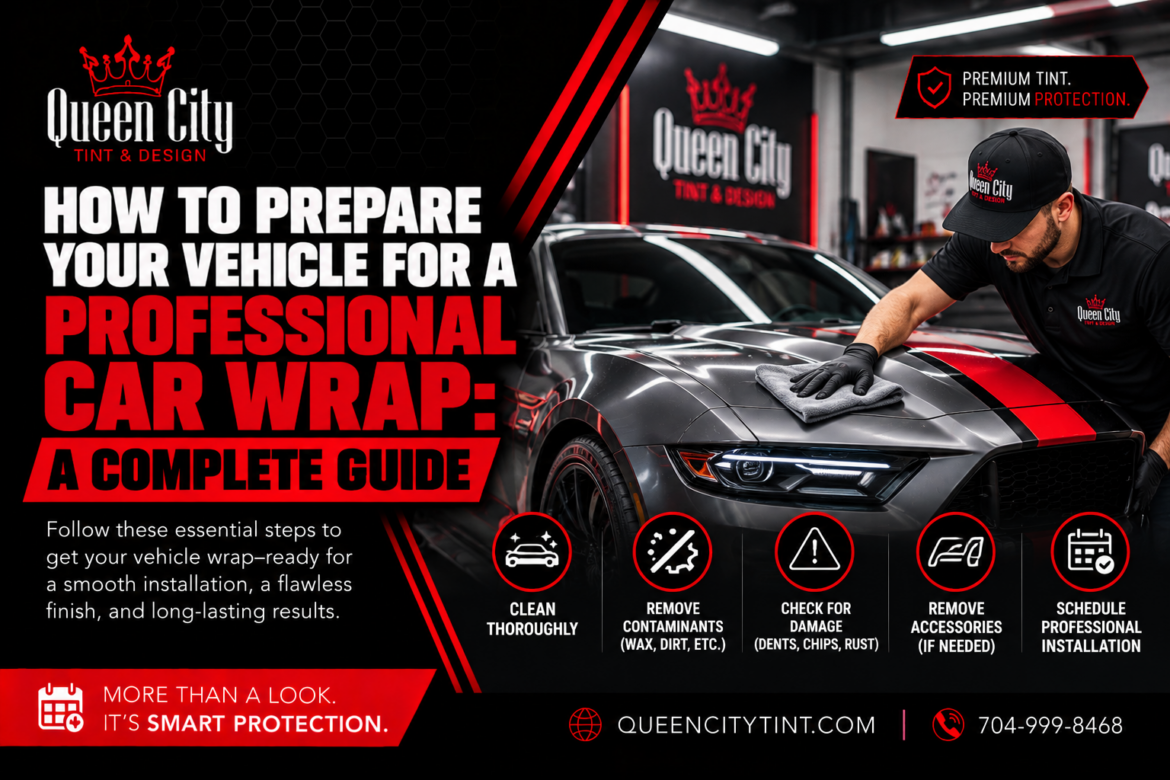
How to Prepare Your Vehicle for a Car Wrap: Complete Guide

How to Prepare Your Vehicle for a Professional Car Wrap: A Complete Guide

If you are considering enhancing your vehicle’s appearance with a professional car wrap, you are not alone. From vibrant colors to unique graphics, car wraps have revolutionized the world of automotive customization.

However, success with your car wrap begins long before a single piece of vinyl touches your vehicle. Proper preparation is the foundation for a flawless finish and long-term durability. In this guide, we walk you step by step through everything you need to do to get your vehicle ready for a professional car wrap.

Why Preparation Matters Before a Car Wrap

You might imagine that a skilled installer can work wonders with any vehicle, but even the best professionals are limited by the condition of the canvas they start with. Wrapping a car is not just about applying a new layer; it is about ensuring that layer adheres perfectly and looks its best for years. This requires meticulous cleaning, surface evaluation, and sometimes, minor repairs. Good preparation helps your wrap last longer, look smoother, and resist peeling or bubbling.

Inspection: Assessing Your Vehicle’s Current State

Begin with a thorough inspection of your car’s exterior. Examine the paint for chips, scratches, deep dents, and rust. Pay attention to areas around the wheel wells and lower panels where road debris might have caused small imperfections.

While minor scratches often pose no problem, large chips, bubbling paint, and rust patches need attention. A car wrap will not hide these flaws; in fact, it can magnify them. Put simply, the better your car’s paint, the better your final result.

Cleaning: The Foundation for a Perfect Wrap

After inspection, a deep clean is essential. The goal is to remove all traces of dirt, dust, oil, grease, and wax. These contaminants can interfere with the vinyl’s adhesive. Start by washing the car thoroughly using a gentle automotive detergent. Focus on the entire exterior, including tight areas like grilles and panel gaps.

After rinsing, you may notice areas where stubborn tar, tree sap, or bug residue remains. Use specialized solvents for these tough spots but avoid anything oily. Once clean, dry the vehicle completely.

Next comes a wipe-down with isopropyl alcohol, which removes any remaining oils and helps ensure the surface is 100 percent clean and ready for vinyl application. Skipping this step or cutting corners could lead to poor adhesion and shortened wrap longevity.

Removing External Accessories and Obstructions

To achieve that seamless, painted-on appearance, installers will wrap behind or beneath certain vehicle elements. Before your appointment, remove items like antennae, license plate frames, plastic trim, roof racks, and custom emblems if possible.

These components can create obstacles for the vinyl and lead to visible seams or awkward edges. If you have aftermarket parts or accessories, check to see if they are easily detachable.

Some items are best left to the professionals, such as side mirrors and door handles. Let your installer know if any of these are damaged or unusually tricky to remove so they can plan accordingly.

Surface Repairs: Addressing Paint and Body Issues

If your vehicle’s paint is chipped or peeling, consider having these spots repaired before wrapping. Vinyl needs a smooth, solid surface to bond correctly. Peeling or bubbled paint is not only visible through the wrap but could worsen as the vinyl pulls on the loose material.

Any rust or corrosion should be professionally treated. Even small dents can affect the finished look, so it is worth considering paintless dent repair for minor issues.

Timeframe: When to Prepare for the Best Results

Do not wait until the day of your installation to begin preparing your car. Aim to finish cleaning at least a day before your appointment to allow full drying. If repairs or bodywork are needed, schedule those a week or two in advance. Remember, the more time spent on proper preparation, the greater the payoff when you see your freshly wrapped vehicle.

Communicating With Your Installer

Share any relevant information with your wrap installer before the service. Let them know about past paintwork or repairs, aftermarket parts, and any questions you have about the process. A reputable shop will appreciate your attention to detail and may provide additional tips specific to your vehicle make or model.

Post-Preparation Checklist

Before the big day, run through this quick checklist to ensure your car is wrap-ready:

  • Vehicle thoroughly washed and decontaminated
  • All removable accessories taken off
  • Paint chips, rust, and dents addressed
  • No wax or polish applied within a week of wrap appointment
  • Car fully dried

By following these steps, you set the stage for a smooth application and a stunning final look.

Frequently Asked Questions

How clean should my car be before wrapping?

Your car should be as clean as possible, free of dust, dirt, sap, tar, and wax. Any contamination can prevent the vinyl from sticking properly and cause visible blemishes.

Can vinyl wrap cover scratches or dents?

Vinyl can only smooth out tiny imperfections; it will not hide major scratches, dents, or peeling paint. In fact, wrap may emphasize these flaws, so repairs should be completed first.

Should I wax or polish my car before getting it wrapped?

Wax and polish should be avoided before a wrap. These products can hinder vinyl adhesion and must be fully stripped from the car’s surface.

Will wraps damage my original paint?

No, if the paint is in good condition, professionally installed wraps actually protect the paint from minor abrasions and UV exposure. Removing the wrap later is usually safe when proper procedures are followed.

Conclusion: Setting the Stage for Flawless Results

A professional car wrap is a worthwhile investment in your vehicle’s appearance and protection. However, the true beauty and durability of your new wrap depend heavily on how well you prepare ahead of time. By inspecting, cleaning, and communicating with your installer, you ensure that every step after will build on a solid foundation. The result will turn heads for all the right reasons.

Does Window Tint Reduce Car Heat? Key Facts for Drivers

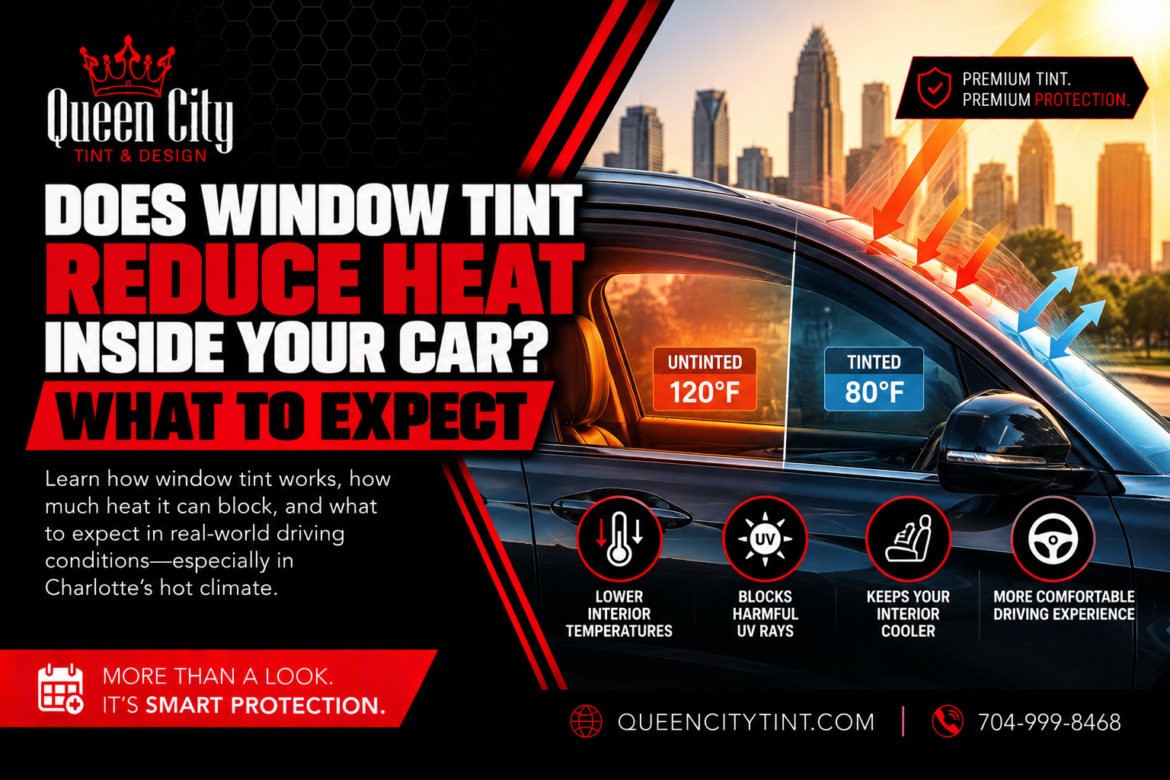
Does Window Tint Reduce Heat Inside Your Car? What to Expect

Few experiences are as uncomfortable as returning to your car after it has been baking in the North Carolina sun. The steering wheel is nearly too hot to touch and the air inside feels suffocating. Naturally, many drivers wonder if investing in window tint can genuinely cool down their vehicle’s interior and make those hot days a little more bearable.

At Queen City Tint in Charlotte, we get this question every week: Does window tint really reduce heat inside your car, and what else should you expect from installing professional window film? Let’s clarify what window tint can do for you, how it works, and what outcomes you can actually count on.

Understanding How Window Tint Works

To address the core question, you have to understand what window tint is and how it operates. Window tint refers to a thin layer of film that is applied to the inside of your car windows. This film is specially engineered to control the amount of sunlight, and more importantly, solar energy, that enters your vehicle.

Not all light from the sun is created equal. Ultraviolet rays are responsible for fading and skin damage, while infrared rays are the primary contributors to heat. Quality window film is designed to block a significant portion of both UV and infrared rays, reducing the amount of heat that builds up inside your car.

How Much Heat Can Window Tint Block?

The actual reduction in interior heat will depend on the specific window film you choose. Standard dyed window tints absorb some heat and cut down on glare, but they only make a modest difference in cabin temperature.

More advanced films, including ceramic or nano-ceramic window tints, can block as much as forty to sixty percent of the solar heat that would otherwise enter your car. On a sunny summer day in Charlotte, after several hours in direct sunlight, a vehicle with no window tint can reach temperatures well above 120 degrees Fahrenheit.

Quality ceramic tint can lower the interior temperature by twenty to thirty degrees, turning that uncomfortably hot car into a much more tolerable environment. While no tint will make your car cold when parked in full sunlight, it will make a significant difference you can feel.

Benefits Beyond Just Heat Reduction

While heat control is the major reason most drivers seek window tint, there are valuable additional benefits worth knowing.

UV Protection

High-grade window tints can block up to ninety-nine percent of ultraviolet rays. This not only protects your skin from potential damage but also preserves your vehicle’s interior, including upholstery, dashboard, and trim, which can fade and crack with excessive sun exposure.

Improved Comfort

By reducing the amount of heat entering your car, your air conditioning system does not need to work as hard. This can improve comfort levels and may even contribute to better fuel economy, since your car’s A/C puts an extra load on the engine.

Increased Privacy and Security

Tinted windows make it harder for people to look inside your vehicle, which naturally deters theft and prying eyes. Your personal belongings remain more secure and you can enjoy a greater level of privacy while driving.

Enhanced Glare Control

Driving into a rising or setting sun can be hazardous. Window film cuts down on unexpected glare, making it easier and safer to see in changing light conditions.

What to Expect from a Professional Window Tint Installation

Choosing a professional installer offers clear advantages over attempting a DIY kit. A trained team uses specialized tools and techniques to ensure a seamless application, with no bubbles or creases.

It’s important to be realistic about the process. Newly installed window tint may need a few days to fully cure, during which time you should avoid rolling down your windows. A reputable shop will guide you through aftercare and help you choose the right level of darkness and performance based on local law and your specific needs.

Factors That Affect the Amount of Heat Reduction

Several factors influence just how much cooler your car will feel after tinting:

  • Type of film: Ceramic and nano-ceramic films provide the greatest heat rejection without making your windows appear overly dark.
  • Window coverage: Tint applied to all side windows and the rear window delivers the best overall heat reduction. Adding a windshield strip at the very top can help further limit sun intrusion.
  • Shade and color: Darker tints may offer a little more shading, but performance is determined more by the film’s technology than color alone.

Common Misconceptions

You do not have to install the darkest legal tint to see significant heat reduction. High-tech films are virtually clear yet still block a remarkable amount of solar energy.

Another misconception is about warranty and durability. Quality window films come with warranties for color stability and performance, meaning your investment is protected for years.

Frequently Asked Questions

Does tinting my windows affect my visibility at night?

A professionally installed, legal-grade tint with moderate darkness will not noticeably hinder your visibility at night. It is essential to follow state regulations and consult with an expert before selecting the film’s shade.

Is window tinting legal in North Carolina?

Yes, North Carolina law allows window tinting, but there are specific regulations concerning how dark the tint can be for side and rear windows. Your installer should always use film that complies with local statutes.

How long does window tint last?

Modern window films are designed to be durable and can last for many years, often exceeding a decade with proper care. Ceramic films tend to have the longest lifespan.

Will window tint bubble or turn purple over time?

Low-quality films may discolor or bubble. When you choose a reputable shop installing high-quality, brand-name film, these issues are virtually eliminated, and warranties are available for peace of mind.

Conclusion

So does window tint reduce heat inside your car? Absolutely. While results vary based on the type of film and your vehicle’s exposure to sunlight, nearly all modern tints provide a much cooler cabin and protect you and your car from North Carolina’s intense rays. For drivers in Charlotte, investing in professional window tinting pays returns in comfort, appearance, and value.

If you are considering window tint, focus on quality ceramic or nano-ceramic films and work with a local professional to ensure the best possible results for your comfort and budget.

PPF for New Cars: Secure Long-Lasting Paint Protection Early

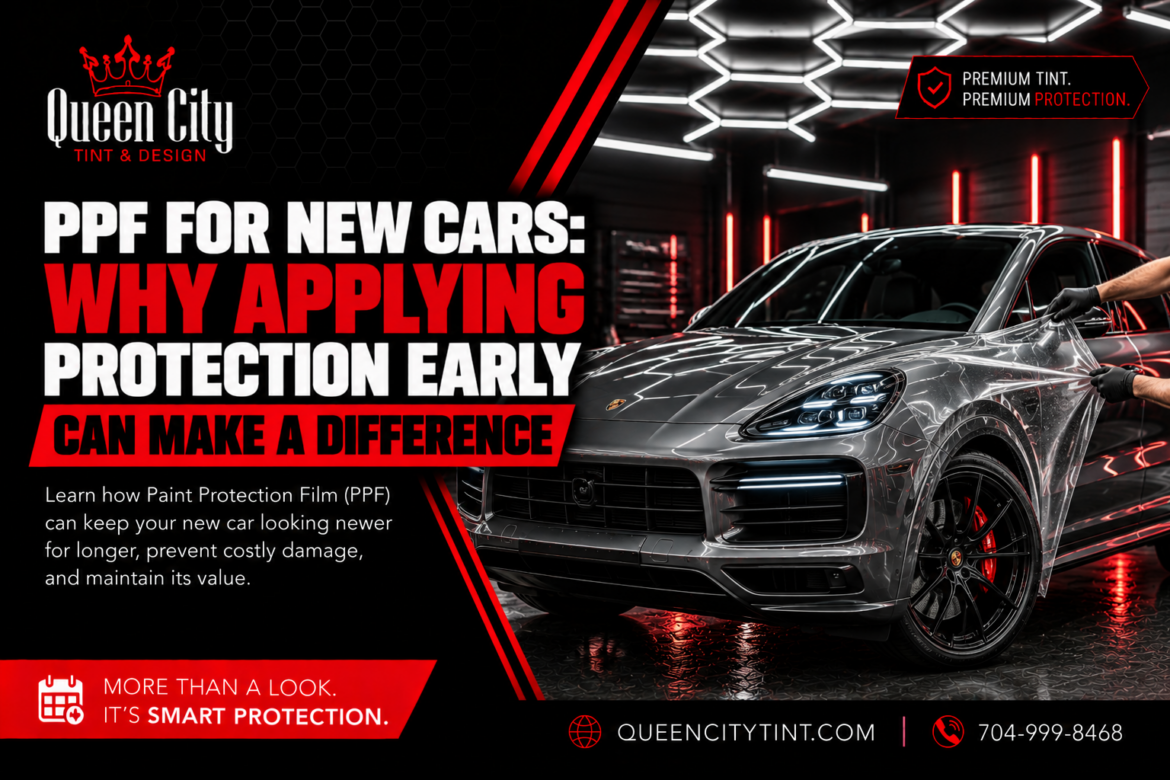
PPF for New Cars: Why Applying Protection Early Can Make a Difference

Every new car owner cherishes that moment when their vehicle sits pristine, glimmering under the sun, free from blemishes and scratches. But as time passes and daily drives rack up, protecting that factory-fresh appearance becomes an uphill battle.

Paint Protection Film, often referred to as PPF, offers a compelling solution, especially when applied early in your vehicle’s life. In this blog, we’ll explore why early PPF installation is the best investment you can make for your new car and how it keeps your paint looking newer, longer.

Understanding Paint Protection Film

Paint Protection Film is an advanced, transparent film that adheres directly to the painted surfaces of your vehicle. Its main job is to defend the paint against common road hazards. Stones, gravel, insects, tree sap, and even harsh UV rays can damage a car’s exterior. Without some form of protective barrier, even daily parking lot dings and accidental scratches can quickly diminish a new car’s shine and value.

PPF technology has advanced over the years. Modern films are almost invisible once applied and feature self-healing properties, meaning minor scratches disappear with heat from the sun or an engine.

Why Timing Matters: Case for Early Application

Many car owners wait until chips and scratches have already appeared before they consider protecting their vehicle. Yet, the smartest approach is proactive: the earlier you wrap your new car in PPF, the more you preserve its original beauty and resale value.

Preserve Factory Freshness

Within days of purchase, a new car is exposed to countless unavoidable hazards. Tiny stones kicked up by passing traffic can cause unsightly chips. Washing with improper tools can swirl or scratch the paint. Because your vehicle’s finish is in its best shape right off the showroom floor, applying PPF immediately locks in that flawless look.

Avoid Costly Paint Repairs

Once a chip, scratch, or stain marks your paint, you are faced with the prospect of expensive repairs that may never quite look factory-original. PPF can prevent many of these minor and sometimes major issues, saving you from future repainting bills.

Boost Resale Value

A well-maintained exterior is a top concern for buyers in the used car market. If your car’s paint remains unblemished, it will always stand out. Early PPF installation provides tangible proof to future buyers that you have cared for the vehicle meticulously, often commanding a better resale price.

Reduced Maintenance Anxiety

Knowing your new car is protected gives peace of mind. With PPF, you can confidently drive on highways, take scenic routes, or even park in crowded lots without constantly worrying about damaging your paint. This freedom alone is worth considering.

Key Benefits of Paint Protection Film for New Cars

While there are many car care products promising the world, PPF stands out with benefits that are especially valuable for new vehicle owners.

  • Lasting Gloss and Shine
    Modern PPF enhances the natural shine of your paint, making your vehicle appear even more polished.
  • Self-Healing Technology
    Minor scratches and swirl marks disappear thanks to engineered self-healing properties. The film’s surface recovers when exposed to heat, restoring its smoothness and clarity.
  • Stain and Chemical Resistance
    PPF acts as a barrier against bird droppings, bug splatter, sap, and road tar, all of which can etch or stain exposed paint if left untreated.
  • UV Protection
    Continuous sunlight can oxidize and dull your paint. Quality PPF contains UV inhibitors, preventing premature fading and discoloration for years.
  • Invisible Defense
    The latest films are crystal clear, maintaining your car’s original aesthetic without the unsightly orange peel effect or yellowing common with older protective films.

How to Choose the Right PPF Installer

Investing in PPF is only part of the equation. The skill and experience of the installer often determine how well the film protects and looks on your new vehicle.

Seek a shop that specializes in high-end vehicles and demonstrates meticulous attention to detail. They should offer custom-fit patterns, edge wrapping, and post-installation care advice. The right team will treat your new car as their own, ensuring a flawless finish that lasts.

Frequently Asked Questions

What areas of a new car should I protect with PPF?

For most new vehicles, the front bumper, hood, side mirrors, and front fenders are most vulnerable. However, full-body wraps are becoming increasingly popular for maximum protection.

How long does Paint Protection Film last?

High-quality PPF, when professionally installed and maintained, can protect your paint for five to ten years or longer. Lifespan varies by use, care, and environmental factors.

Will PPF change the color or appearance of my paint?

No, the best films are optically clear and designed to enhance, not alter, your paint’s appearance. There are even matte finish options if you desire a unique look.

Is it possible to remove Paint Protection Film in the future?

Yes, PPF is designed to be removable without damaging OEM paint. If you ever want to sell or refresh your vehicle, it is easy for professionals to take the film off.

In Summary: Early Protection, Lasting Results

Applying Paint Protection Film early in your car ownership journey is a wise decision that pays off in both appearance and value. The benefits of acting quickly far outweigh waiting for paint damage to arise.

By investing in professional installation and premium material, you make your vehicle’s original beauty last. If you are passionate about your new car and want to preserve its stunning look for the long run, don’t delay, give your paint the protection it truly deserv

Car Wraps for Personal Vehicles: Popular Styles, Designs, and Trends

When it comes to personalizing and protecting your vehicle, few options are as versatile and visually dynamic as car wraps. Over the past decade, the popularity of car wraps in Charlotte and across the nation has skyrocketed.

As more drivers search for ways to make their cars stand out, wraps have evolved from simple color changes to a full spectrum of creative expression. Whether you want a unique design, a professional look, or a subtle touch of luxury, wraps offer almost limitless potential. In this article, we will explore the latest styles, top design trends, and the reasons why so many car owners are choosing wraps over traditional paint.

Understanding Car Wraps: The Basics

A car wrap is a large vinyl graphic or decal that is applied directly over the original paint of your vehicle. Unlike permanent paint jobs, wraps can be removed later without damage, making them an excellent option for those who want change without commitment. Wraps can fully cover the vehicle or just specific sections, such as the hood or roof. This approach allows tremendous flexibility, both in design and in budget.

Car wraps typically come in two main forms: color change wraps and printed graphics wraps. Color change wraps deliver a seamless, uniform look in a matte, satin, or gloss finish, while printed graphics allow for custom patterns, branding, or even photorealistic designs.

Popular Car Wrap Styles

The explosion of customization options in car wraps has brought about several distinct styles, each offering unique ways to express personality or achieve specific goals.

Matte and Satin Finishes

Matte finishes have been a mainstay of automotive trends for years. They are recognized by their non-reflective, soft texture, giving vehicles a modern and understated allure. Satin wraps, on the other hand, offer a middle ground between glossy and matte, providing a silky sheen that stands out without being too flashy. Both options are popular among car enthusiasts looking for an elegant and contemporary look.

Gloss and Metallic Wraps

Glossy wraps resemble a high-quality paint job but typically cost less and require less maintenance. Metallic wraps add an even greater dimension, often shimmering under sunlight, which gives the car a dynamic, high-end appearance. Variations such as chrome and brushed-metal finishes are especially popular with sports and luxury vehicles.

Textured and Specialty Films

For those who like to push boundaries, there are textured wraps that mimic carbon fiber, leather, or brushed aluminum. These materials add a tactile dimension to your car’s appearance, enhancing both visuals and touch.

Specialty films can even include glow-in-the-dark elements or color shifting pigments that vary based on the viewing angle and lighting conditions, ideal for those who truly want to make a statement.

Partial Wraps and Accents

If you prefer a subtle change, partial wraps can add color or custom graphics to hoods, roofs, mirrors, or racing stripes, without committing to a full vehicle transformation. This approach is perfect for drivers who want a unique touch while keeping costs low.

Trending Designs for Personal Vehicles

The creative scope of car wraps means trends are always evolving. Here are some of the leading design directions in Charlotte and beyond.

Color-Shift and Iridescent Wraps

Perhaps one of the most eye-catching trends is the rise of color-shift wraps. These iridescent films change hue depending on light and angle, resulting in a mesmerizing effect that never looks the same twice. For drivers who want a futuristic, ever-changing look, color-shift wraps are hard to beat.

Minimalist and Monochrome Looks

On the other end of the spectrum are minimalist designs. Single-color wraps in piano black, arctic white, or deep navy exude class and sophistication. More car owners are choosing simple, monochrome themes to communicate understated elegance, with subtle matte or satin finishes adding depth.

Custom Graphics and Personal Branding

With advanced printing technology, it is possible to create entirely custom designs that reflect hobbies, passions, or even professional branding. This trend is especially popular among entrepreneurs and influencers who wish to turn their vehicles into moving billboards or artistic statements.

Nature-Inspired Patterns

Leaf motifs, camouflage, stone textures, or aquatic designs are being chosen by those who want to bring the outdoors to their daily commute. These wraps are particularly popular with adventure enthusiasts or those who simply enjoy a touch of the unconventional.

Why Choose a Car Wrap?

The surge in demand for car wraps is not just about appearance. There are practical benefits as well:

  • Protection: Vinyl wraps shield your vehicle’s original paint from sun damage, minor abrasions, and road debris.
  • Flexibility: Unlike permanent paint, wraps can be changed to match new styles or trends.
  • Resale Value: Preserving the factory paint can help retain your vehicle’s value.
  • Advertising: For business owners, wraps offer an effective, mobile advertising solution.

Common Myths and Misconceptions

Although wraps are growing in popularity, some misconceptions persist. For example, many believe that wraps will damage their vehicle’s paint. In reality, quality wraps installed by professionals can be removed without harm, provided the original paint is in good condition.

Frequently Asked Questions

How long will a car wrap last?

Most high-quality vehicle wraps last between five and seven years, depending on sun exposure, daily use, and maintenance habits.

Can I wash my wrapped car like normal?

Yes, but it is best to avoid high-pressure washers and abrasive brushes. Use gentle soap and water, or consider professional wrap-friendly detailing.

Is a car wrap permanent?

No, wraps are designed to be removed. When taken off properly, they do not damage the paint underneath.

Does wrapping my car void my warranty?

Wraps do not typically void vehicle warranties, but it is wise to check your manufacturer’s guidelines first.

Conclusion

Car wraps represent a fusion of creativity, technology, and practicality. Whether you are in Charlotte or anywhere else, the sheer range of styles, finishes, and graphics now attainable has turned car wraps into a leading choice for personal vehicle customization.

From stealthy matte finishes to wild color-shifting designs, wraps offer something for everyone. More than just a cosmetic upgrade, they provide protection and adaptability, making them as functional as they are fashionable.

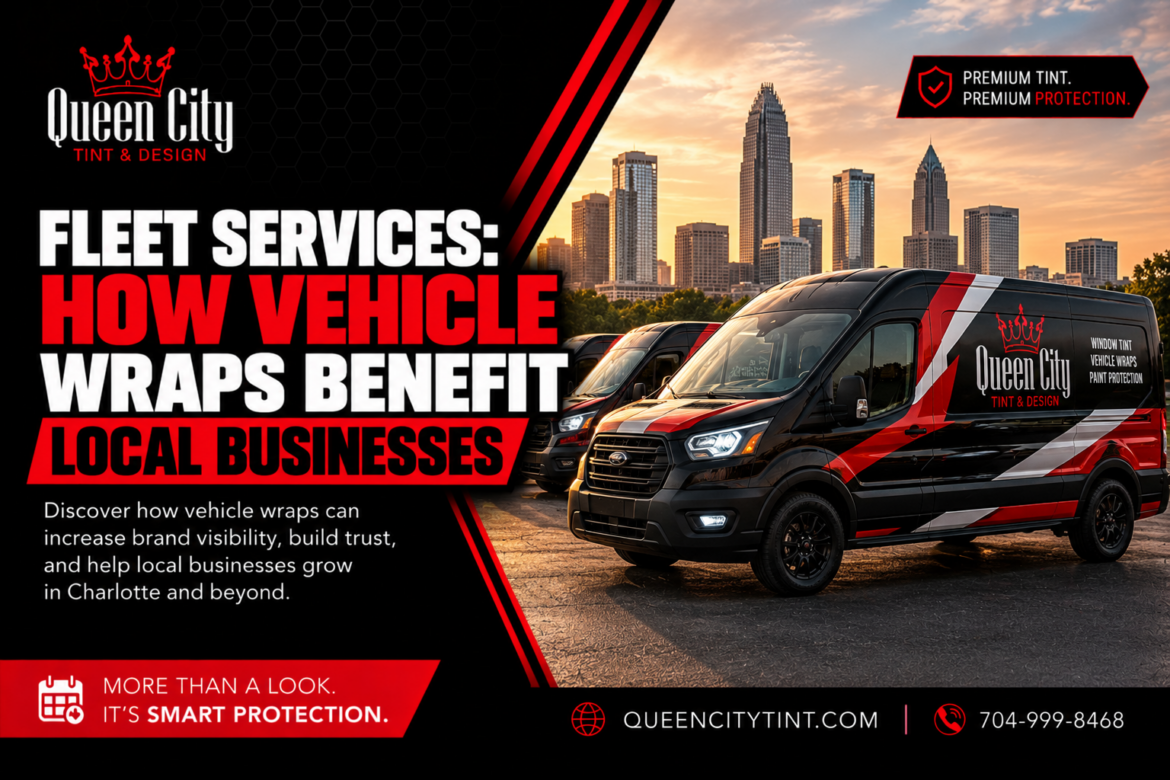
Fleet Services: How Vehicle Wraps Benefit Local Businesses

In a competitive marketplace, standing out is not just an advantage, it’s a necessity. For local businesses dependent on transportation, fleet vehicles are often the most visible extension of their brand. Yet, many companies are missing a powerful opportunity to transform these assets into moving advertisements.

At Queen City Tint, we’ve seen firsthand how professionally designed vehicle wraps can become the secret weapon for local businesses looking to amplify their brand presence, capture attention, and drive growth.

This article explores how vehicle wraps, as part of fleet services, bring real benefits to local companies. We’ll cover everything from brand exposure and cost efficiency to protection and professionalism. Whether your fleet consists of two cars or twenty vans, the right vehicle wrap strategy can make a dramatic impact on your business.

Maximizing Brand Visibility

The roads are crowded with potential customers, but capturing their interest is a unique challenge. Vehicle wraps turn traffic into opportunity. When your fleet vehicles are covered with eye-catching graphics and clear branding, every trip becomes a chance to showcase your business to hundreds, sometimes thousands, of viewers each day.

Unlike static signs or billboards, wrapped vehicles reach people where they live, work, and commute. Branding that is bold, creative, and memorably displayed on your vehicles builds recognition rapidly.

Customers are much more likely to remember your business if they see your logo and messaging repeatedly as they drive around town. Unlike fleeting digital ads, a wrapped vehicle makes a personal, tangible impression that can’t be clicked away or blocked by a filter.

Cost-Effective Advertising

Traditional advertising can eat up marketing budgets quickly, especially for small local businesses. Think about the recurring expenses of online ad campaigns, print media, or billboard rentals.

Now compare that to the one-time investment of a vehicle wrap, which typically lasts several years and provides a consistent, uninterrupted advertising presence. Vehicle wraps represent a highly cost-effective method for getting your company’s message in front of as many eyes as possible, every single day.

The “cost per impression” for vehicle wraps steadily goes down over time, making them one of the most affordable outdoor advertising strategies for local businesses. The return on investment is substantial because your fleet never stops promoting your brand.

Protection for Your Vehicles

Business owners understand that maintaining their fleet is not just about appearance, it’s about minimizing costs over the lifespan of their vehicles. High-quality vinyl wraps protect original paintwork from sun damage, chips, minor abrasions, and harsh weather conditions. This protective layer helps retain resale value and ensures vehicles always look fresh and well cared for.

If you decide to update your branding or change your promotional message, removing (or updating) a wrap causes no damage to the underlying paint. In fact, a well-maintained wrapped vehicle comes out with the same or better resale value compared to one that has been exposed to years of unprotected use.

Building Professionalism and Trust

A wrapped fleet instantly communicates professionalism. Customers notice details, and nothing signals organization and reliability like consistently branded service vehicles. When your trucks or vans arrive at a job site displaying your business identity, customers feel a greater sense of trust and recognition.

This professionalism not only impresses your clients, but also helps strengthen your reputation in the community. Well-branded vehicles show that you are serious about your business and your presence in the marketplace. As a local company, this perception can set you apart from larger, faceless competitors.

Versatility and Customization

Vehicle wraps offer unmatched flexibility in design and messaging. From subtle logos on car doors to full-coverage graphics on large vans, wraps can be tailored to fit any style, message, or promotional campaign. Updates can be made to highlight seasonal offers, new services, or company milestones, without the headaches of repainting or dealing with temporary signage.

The design process is collaborative, allowing you to work with experienced wrap designers to ensure your company’s branding remains clear, readable, and impactful. At Queen City Tint, we ensure that our wraps are meticulously installed for a seamless look, free from bubbles, wrinkles, or misalignments.

Eco-Friendly and Reversible

Modern vehicle wraps use environmentally friendly materials and can be removed cleanly when needed. This allows for flexibility in marketing and ensures you can change or upgrade your advertising approach without contributing to unnecessary waste or damage. For businesses prioritizing sustainability, this is an added benefit that aligns with modern values and customer expectations.

Frequently Asked Questions

How long does a vehicle wrap typically last?

A professional vehicle wrap can last five to seven years when cared for properly. Longevity depends on factors like sun exposure, driving conditions, and cleaning practices.

Will a wrap damage my vehicle’s paint?

No, quality vinyl wraps protect the paint underneath. In fact, they help prevent chips and fading. When installed and removed by professionals, there is no damage to the original finish.

Can I wrap leased vehicles?

Yes, most leased vehicles can be wrapped, but it’s best to confirm with your leasing agent first. Because wraps are removable, they offer a non-permanent way to brand your fleet without violating lease agreements.

What kind of designs work best for vehicle wraps?

The most effective wraps use bold colors, clear logos, and concise messaging. Too much information can clutter the design. Working with expert designers will ensure your wrap is legible and memorable at a glance.

Conclusion

Vehicle wraps offer local businesses a powerful, flexible, and cost-effective marketing strategy. By turning your fleet into rolling billboards, you benefit from increased brand visibility, long-term advertising savings, and an enhanced company image.

In the dynamic world of local business, wrapped vehicles are not just a cosmetic upgrade, they are a strategic investment that pays dividends with every mile driven. If you are ready to bring your brand to the streets and experience the benefits of fleet wraps firsthand, Queen City Tint is here to guide you through every step.

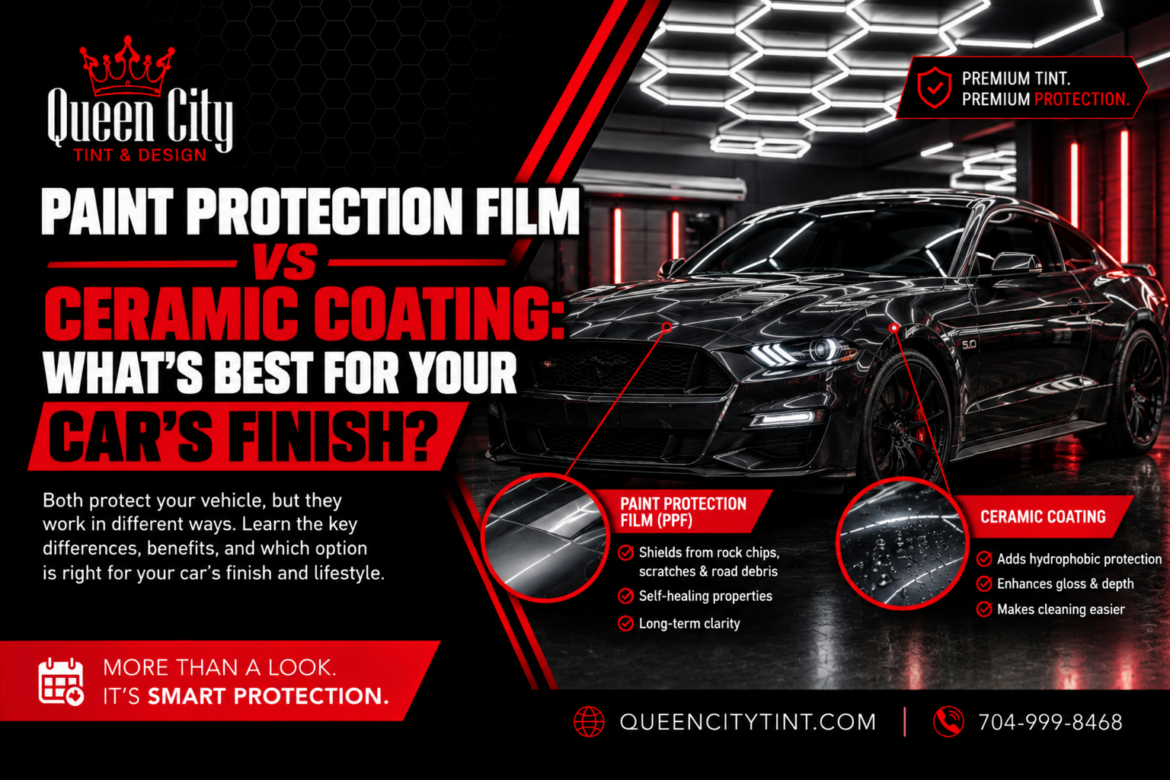
Paint Protection Film vs Ceramic Coating: What’s Best for Your Car’s Finish?

When it comes to preserving your vehicle’s appearance, few topics generate more debate among car enthusiasts and owners than the comparison between paint protection film and ceramic coating.

Both promise to safeguard your car’s finish from daily wear, UV rays, environmental hazards, and accidental scratches. But which one is right for your car and your investment? At Queen City Tint, we offer both premium solutions to the Charlotte community, so let’s break down the real-world differences and benefits of each option.

Understanding Paint Protection Film

Paint protection film is a virtually invisible polyurethane material applied directly onto the painted surfaces of your car. Its roots go back to military applications, but today, automotive paint protection films have evolved into sophisticated barriers that protect even the most delicate finishes.

Key Benefits of Paint Protection Film

  • Impact and Scratch Resistance
    Paint protection film is designed primarily to guard against road debris, rock chips, scratches, and light abrasions. The film acts as a sacrificial shield, absorbing impacts that would otherwise damage your paint.
  • Self-Healing Properties
    Many high-quality films offer self-healing capabilities. Small scratches and swirl marks disappear with the application of heat, whether from the sun or a warm water rinse.
  • Stain and Yellowing Resistance
    Modern paint protection films resist discoloration and will not yellow with UV exposure, keeping your finish crystal clear over time.
  • High-Gloss and Matte Options
    You can match the film to the look you want, whether maintaining factory gloss or adding a matte finish for a custom look.

Ideal Uses for Paint Protection Film

  • New vehicles to preserve showroom finish
  • High-value or collector cars
  • Daily drivers exposed to harsh road conditions
  • Owners seeking maximum impact protection

Maintenance of Paint Protection Film

Paint protection film is relatively low-maintenance. Regular washing with mild soap maintains its clarity. Depending on the quality and thickness of the film, it can last many years without needing replacement, especially if professionally installed.

What Is Ceramic Coating?

Ceramic coatings are liquid polymer solutions that bond chemically with your vehicle’s factory paint, creating a durable and hydrophobic surface. Unlike wax, which simply sits on top, ceramic coatings seal the paint with a hard, glass-like finish.

Key Benefits of Ceramic Coating

  • Hydrophobic Effect
    Water beads and dirt repels instantly, making routine cleaning faster and easier. This effect also keeps your car looking cleaner longer.
  • UV and Chemical Protection
    Ceramic coats help prevent oxidation, paint fade, and etching from acidic contaminants like bird droppings or tree sap.
  • Enhanced Gloss and Depth
    A well-applied ceramic coating delivers a rich shine, intensifying your car’s color and improving reflectivity.
  • Scratch Resistance (to a Degree)
    While not as robust against chips and direct impact as film, ceramic coatings add a light, scratch-resistant layer that reduces minor swirl marks.

Ideal Uses for Ceramic Coating

  • Daily driven vehicles needing easier cleaning
  • Owners wanting an ultra-glossy, “just-detailed” appearance
  • Those looking to protect against staining or chemical damage

Maintenance of Ceramic Coating

The key advantage of ceramic coating is its ease of maintenance. Regular washing keeps contaminants from settling, and washing is noticeably faster because water and grime slide off easily.

Head-to-Head: Which Option is Best for Your Car?

The decision ultimately hinges on your main priorities for car protection.

  • If you prioritize maximum protection from rock chips, scratches, and minor accidents, paint protection film offers unparalleled barrier strength. Paint protection film covers the physical impact zone, especially for high-risk areas such as bumpers, hoods, and fenders.
  • If daily cleaning, stain prevention, and a glossy finish are your priorities, ceramic coating shines. It makes cleaning effortless, enhances gloss, and prolongs paint health against environmental exposure.

For many car enthusiasts and owners, combining both options is the ultimate solution. Paint protection film is often applied to areas prone to damage while ceramic coating is used over the entire body for added shine and easy maintenance.

Frequently Asked Questions

What lasts longer paint protection film or ceramic coating?

Generally, paint protection film can outlast ceramic coatings when it comes to physical barrier properties. A high-quality film can last for five to ten years. Ceramic coatings, depending on the brand and aftercare, can last two to five years before reapplication is needed.

Is it possible to apply ceramic coating over paint protection film?

Absolutely. In fact, at Queen City Tint, we regularly apply ceramic coating on top of protection film for enhanced hydrophobic effect and simplified cleaning. The two products work together, not against each other.

Will either product prevent all rock chips or scratches?

While paint protection film is highly resistant, it is not indestructible. Ceramic coating, on the other hand, is scratch-resistant only to a degree. Neither makes your car immune, but both significantly reduce the chances of damage compared to unprotected paint.

How do I decide which is best for my lifestyle and vehicle?

Evaluate your driving habits, parking environment, the value of your car, and your maintenance preferences. A professional consultation can provide personalized recommendations based on your vehicle and how you use it.

Conclusion: Invest Wisely in Your Vehicle’s Future

Both paint protection film and ceramic coatings are smart, future-focused investments in your car’s appearance and resale value. Your final decision will depend on your goals. Do you want absolute physical barrier protection, or is your main concern appearance and ease of cleaning?

At Queen City Tint, our experts are ready to help Charlotte’s automotive community make informed decisions with honest advice and professional installation. Ready to preserve your vehicle’s shine and beauty? Contact us and discover the best option for your car’s finish.

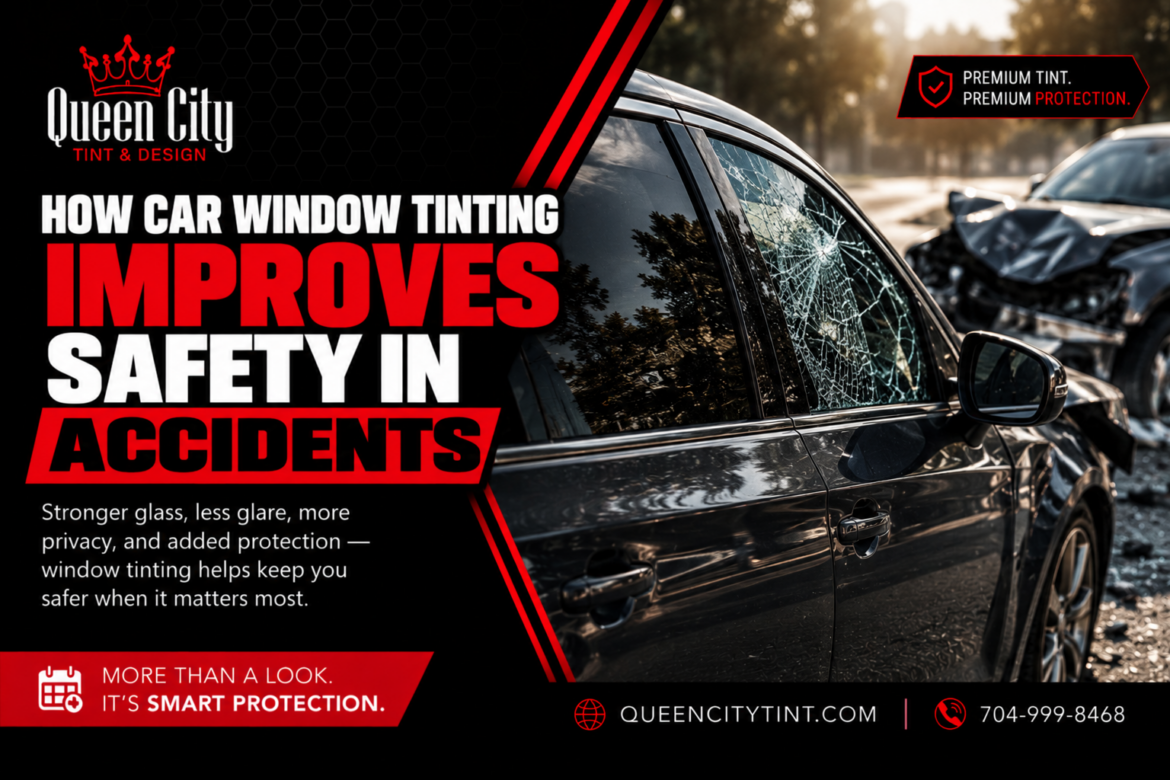
How Car Window Tinting Improves Safety in Accidents

When we think about car window tinting, most people picture a sleek appearance or a more comfortable ride, shaded from the harsh sun. But there’s a deeper reason to consider tinting for your vehicle: the potential safety benefits, especially during road accidents. While aesthetics and comfort sell the service, safety should not be overlooked.

Understanding Car Window Tinting

Car window tinting involves applying a thin film to the vehicle’s window glass. This film is engineered to control the amount of sun and heat that enters your car, but its capabilities go far beyond blocking rays.

Modern automotive window tints are made from advanced polymers and, depending on their grade, can be equipped to enhance structural integrity and passenger safety during unforeseen events.

The Science of Windows During Accidents

In the event of a collision, one of the primary threats to occupants is shattered glass. Automotive glass is manufactured to break into small, less-sharp pieces for safety, but in high-impact situations, these fragments can still cause injury. This is where quality window film comes into play. Even a thin tint film can hold broken glass together, preventing projectiles and minimizing injury risks.

Preventing Ejection and Injury

When a window breaks upon impact, the sudden rush of force can eject passengers or scatter shards at high speed. Window tint acts as a kind of safety net, binding the pieces together as the glass fractures. This containment drastically reduces the risk of ejection and decreases the likelihood of lacerations during a severe accident.

Enhanced Protection from Road Debris

Glass is not only at risk from impacts with other vehicles. During accidents, loose road debris or parts from surrounding cars can strike windows with great force. A window with applied tint is more likely to absorb and disperse this energy without instantly collapsing, buying precious moments and adding a layer of protection for everyone inside.

Improved Visibility Under Stressful Conditions

Accidents often occur during poor weather or staggered daylight conditions. Window tint minimizes glare from the sun and headlights, offering drivers a clearer, less overwhelming view of the road. In stressful accident scenarios, this slight advantage can help drivers make faster, more accurate decisions,  possibly avoiding or lessening the severity of a crash.

Safeguarding Valuables and Preventing Break-Ins After Accidents

It’s not the accident alone that can put you and your belongings at risk. A disabled vehicle may sit unattended before help arrives. Windows protected by tint make it harder for would-be thieves to gain access, as the layered film resists shattering and discourages smash-and-grab attempts.

Heat and UV Control for Accident Victims

After a crash, occupants could be forced to wait in their vehicle for extended periods. Window tint reduces interior heat and blocks harmful ultraviolet rays. This temperature control can be especially important if the car is disabled in the sun, helping reduce health risks for anyone waiting for emergency assistance.

Legal Compliances and Tinting for Safety

There are regulations regarding how dark or reflective your tint can be, and for good reason. Excessively dark windows can impact driver visibility at night. Reputable tinting businesses ensure their films offer safety and comfort without exceeding local legal limits. The right film lets you reap the safety benefits without creating new risks or legal hassle.

Why Queen City Tint Focuses on Safety

As specialists in auto window tinting, we emphasize films engineered for more than looks. Each installation at Queen City Tint considers factors like glass type, accident response, and compliance with safety standards. Our goal is not just to keep your vehicle cool or stylish, but also to ensure you and your loved ones have every possible defense during the moments that matter most.

Frequently Asked Questions

How does car window tint help during a car accident?

Window tint helps by holding broken glass together, making it less likely that sharp shards or entire panes will be projected into the car or onto its occupants during a collision. This added structure also slows down ejection of debris and people.

Will window tint make it harder for emergency responders to help me?

Modern vehicle window films are designed to allow sufficient visibility into the car. They do not prevent emergency responders from breaking glass if required, but they limit airborne glass fragments, offering more safety for you and for first responders.

Is window tint legal on front windows if I want improved safety?

Most states allow window tint on front windows up to a certain visible light transmission percentage. Always check your local regulations or consult a professional installer like Queen City Tint, we balance optimal safety with full legal compliance.

Besides safety, does tint affect my day-to-day driving?

Yes, in a positive way. Properly installed tint can minimize sun glare and eye strain, maintain a cooler cabin, and protect the interior from fading. These factors also play into safer, more comfortable driving all year round.

Conclusion

Car window tinting is an investment in much more than aesthetics. It plays a vital role in vehicle safety, particularly during accidents, helping prevent injuries, protect valuables, and increase overall occupant security.

For auto owners interested in not only style and comfort but also in practical accident protection, window tinting stands out as a wise choice. Consider both the everyday and unexpected benefits of tinting when thinking about your vehicle’s long-term safety.

How Long Does a Vehicle Wrap Last and What Makes One Wrap Better Than Another?

When you invest in your car, you want it to look its best. One of the most exciting ways to transform your vehicle is by giving it a brand-new wrap. Whether it’s for advertising, personal style, or simply protecting the original paint, car wraps have become a popular solution for car enthusiasts and businesses alike.

But an important question remains: how long does a vehicle wrap last? And what actually makes one vehicle wrap superior to another? In this comprehensive guide, we’ll break down the key factors, the expected lifespan of a wrap, and what you should consider before scheduling your installation.

Understanding Vehicle Wraps: More Than Just Looks

A vehicle wrap is a thin vinyl film applied over the exterior surface of a car, truck, or van. Unlike paint, wraps can be removed without damaging the underlying surface. They come in a variety of colors, finishes, and textures. Whether you’re after a matte black to turn heads or want to display your business branding, wraps provide flexibility and visual impact.

How Long Will a Vehicle Wrap Really Last?

One of the first questions new clients ask is about durability. A professionally applied, high-quality vinyl wrap typically lasts anywhere from five to seven years. This range depends on several influential factors, both in the material itself and how you care for it.

Factors Affecting Longevity

Material Quality

Not all vinyl is created equal. The best wraps are made from premium cast vinyl, which can conform to the car’s curves without cracking or lifting. Cheaper, calendered vinyl may look similar at first but degrades much faster.

Professional Installation

A skilled installer ensures proper adhesion, precise cuts, and smooth edges. Poor installations commonly lead to bubbling, peeling, or premature lifting problems that will shorten the wrap’s life.

Climate and Exposure

Sun, rain, snow, and pollutants all take a toll on a vehicle wrap. Constant. unprotected exposure to UV rays will accelerate fading and aging. Parking your car in a garage or shady area can significantly extend a wrap’s life.

Maintenance Practices
Routine care is essential. Gentle hand washing and avoiding aggressive chemicals help preserve the color and finish. Automated brushes and power washers can lift edges and scratch the surface.

What Makes One Vehicle Wrap Better Than Another?

There’s more to a quality wrap than eye-catching graphics. Superior wraps are distinguished by four main traits:

Quality of Materials

Top-tier vinyl has enhanced UV protection and flexibility, resisting cracking and shrinking. 3M, Avery Dennison, and Oracal are examples of industry-leading materials, though even within these brands, there are different performance grades.

Printing and Ink

If your design is printed, the quality and durability of the ink matter. UV-resistant inks prevent colors from fading and maintain vibrancy over years, not just months.

Installation Technique

A high-quality wrap relies heavily on detail-oriented installers. From thorough surface cleaning to careful heat application at edges, it’s the small steps that prevent future peeling. Trusting a certified technician makes all the difference between a wrap that lasts and one that disappoints.

Warranty and Aftercare

The best wrappers stand behind their work with warranties on both material and labor. They should also guide customers to proper maintenance practices, ensuring the wrap looks great for years.

FAQs: Getting the Most Out of Your Vehicle Wrap

Q1: Can I take my wrapped car through the car wash?

Hand washing is always best for wrapped vehicles. Automatic washes, especially those with brushes, can peel up edges or scratch the vinyl. For the longest-lasting finish, use a gentle soap and microfiber towel.

Q2: Will a vinyl wrap damage my car’s original paint?

A professionally installed and properly removed vinyl wrap will not harm factory paintwork. In fact, it protects the surface from minor scratches and sun damage during its lifespan.

Q3: Can I wrap a car with dents or rust?

Vinyl adheres best to smooth, clean surfaces. Dents and rust spots can cause bubbling and imperfect adhesion, so it’s wise to address body issues before wrapping your vehicle.

Q4: How do I remove a vehicle wrap when it’s time for a change?

When ready to update your look or sell your car, a professional can safely remove the wrap without damaging the original finish. Attempting a DIY removal could result in adhesive residue or paint damage, so it’s best to trust the experts.

Practical Tips For a Longer-Lasting Car Wrap

  • Always park in shaded or covered areas when possible
  • Wash your car by hand and dry with soft towels
  • Address chips or peels immediately before they spread
  • Follow the manufacturer’s care recommendations

Final Thoughts

A vehicle wrap is an investment in style, branding, and protection. With proper care, you can enjoy eye-catching looks and paint protection for years. The differentiator between a wrap that lasts and one that fades away quickly comes down to materials, technique, and ongoing maintenance. Prioritize quality at every step from choosing the installer to caring for your car and your wrap will reward you with maximum lifespan and value.

Is Ceramic Window Tint Worth It in Charlotte’s Heat?

Living in Charlotte, you know the summers can be relentless. Blazing sun, sticky humidity, and the feeling of stepping into a car that’s been transformed into an oven. Car owners in our area are always searching for ways to keep their vehicles comfortable, cool, and protected.

One solution that has gained traction in recent years is ceramic window tint. But what is it, and is it really worth the investment for Charlotte’s unique climate? Here’s what every car owner should know.

What Is Ceramic Window Tint?

Ceramic window tint is a modern, technologically advanced form of window film designed for vehicles. Unlike traditional dyed or metalized tints, ceramic tint contains non-metallic and non-conductive ceramic particles. These particles are virtually invisible to the naked eye but deliver impressive performance when it comes to blocking heat, UV rays, and glare.

Benefits of Ceramic Window Tint in Charlotte’s Climate

Superior Heat Rejection

Charlotte’s summer temperatures often soar into the nineties, making heat rejection a top priority. Ceramic window tint stands out for its exceptional ability to block infrared light the portion of sunlight responsible for most of the heat you feel inside your car. This heat-blocking feature means your air conditioning system doesn’t have to work as hard, keeping your vehicle cool and energy efficient even in the harshest conditions.

UV Protection for You and Your Car

Extended exposure to ultraviolet rays can harm your skin and damage your car’s interior. Ceramic window tint blocks up to 99% of UV rays, reducing your risk of skin cancer and ensuring your upholstery, dashboard, and other interior surfaces remain in top condition for years. In Charlotte, where sunlight is a part of daily life for much of the year, this layer of protection is more valuable than many realize.

Glare Reduction

Driving during sunrise or sunset in Charlotte can mean fighting intense sun glare on busy roads. Ceramic window tint effectively reduces glare, helping you maintain clear vision and stay safer behind the wheel, even when the sun is at its brightest.

No Signal Interference

Some older metallic tints can disrupt the effectiveness of cell phones, GPS devices, and radios. Ceramic tint, however, is non-metallic and won’t interfere with any electronic signals, ensuring your devices function perfectly while you drive.

Cost Considerations

It’s no secret that ceramic window tint is an investment. On average, it does cost more than basic dyed or metalized tints. But for many Charlotte residents, the added comfort, protection, and longevity offset the initial price difference. Plus, saving money on air conditioning and maintaining your car’s interior over time can lead to lower lifetime costs.

Is It Worth It for Charlotte Car Owners?

The short answer is yes. For those living in Charlotte, where sunny weather is both a blessing and a challenge, ceramic window tint offers an unmatched combination of comfort, protection, and style. It addresses not only the immediate problem of heat but also your long-term goals of preserving your vehicle’s value and maintaining a pleasant driving experience.

Ceramic tint is also highly durable. It resists fading, bubbling, and discoloration, ensuring that your vehicle looks sharp for years to come. And for drivers who care about aesthetics, ceramic tints come in a range of shades that can fit any style preference while remaining compliant with North Carolina’s regulations.

Frequently Asked Questions

How long does ceramic window tint last?

Ceramic window tints can last well over a decade when professionally installed and maintained. They are resistant to bubbling and fading, making them a long-term solution for your vehicle.

Does ceramic tint make my car too dark inside?

Ceramic tints come in various shades. You can select a lighter option that still blocks heat and UV rays effectively, so your interior won’t feel overly dark or reduce your visibility.

Can ceramic tint help with privacy and security?

Absolutely. While its main draw is heat and UV protection, ceramic window tint also adds an extra layer of privacy by making it harder for outsiders to see inside your car. Some ceramic tints are thick enough to help keep shattered glass together in case of an accident, providing additional safety.

Will ceramic window tint pay off in the long run?

Most car owners find that ceramic tint offers lasting value. It reduces reliance on air conditioning, helps preserve your interior, and may even enhance resale value by keeping the car in better condition.

Final Thoughts

Charlotte’s heat can be tough, but ceramic window tint gives drivers an advantage that goes beyond simple comfort. With its revolutionary heat rejection, UV protection, and clarity, ceramic window tint is a smart upgrade for anyone looking to get the most out of their vehicle both today and in the years to come. If you are weighing your options for window tinting in Charlotte, ceramic is a choice well worth considering for lasting results and a cooler, more enjoyable driving experience.

Follow Our Facebook

Vinyl Wrap Blue Matte


Facebook Page


This message is only visible to admins.
Problem displaying Facebook posts. Backup cache in use.
Click to show error
Error: Error validating access token: The session has been invalidated because the user changed their password or Facebook has changed the session for security reasons. Type: OAuthException

en_USEnglish