

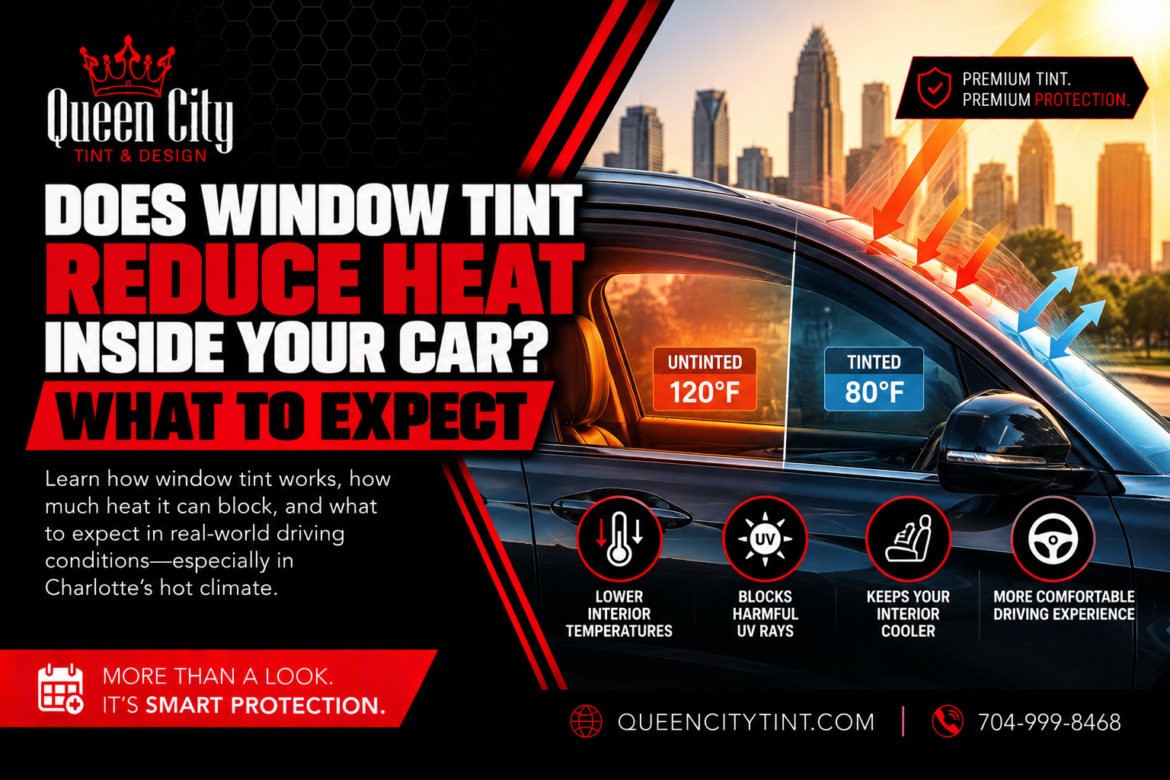
Does Window Tint Reduce Heat Inside Your Car? What to Expect
Few experiences are as uncomfortable as returning to your car after it has been baking in the North Carolina sun. The steering wheel is nearly too hot to touch and the air inside feels suffocating. Naturally, many drivers wonder if investing in window tint can genuinely cool down their vehicle’s interior and make those hot days a little more bearable.
At Queen City Tint in Charlotte, we get this question every week: Does window tint really reduce heat inside your car, and what else should you expect from installing professional window film? Let’s clarify what window tint can do for you, how it works, and what outcomes you can actually count on.
Understanding How Window Tint Works
To address the core question, you have to understand what window tint is and how it operates. Window tint refers to a thin layer of film that is applied to the inside of your car windows. This film is specially engineered to control the amount of sunlight, and more importantly, solar energy, that enters your vehicle.
Not all light from the sun is created equal. Ultraviolet rays are responsible for fading and skin damage, while infrared rays are the primary contributors to heat. Quality window film is designed to block a significant portion of both UV and infrared rays, reducing the amount of heat that builds up inside your car.
How Much Heat Can Window Tint Block?
The actual reduction in interior heat will depend on the specific window film you choose. Standard dyed window tints absorb some heat and cut down on glare, but they only make a modest difference in cabin temperature.
More advanced films, including ceramic or nano-ceramic window tints, can block as much as forty to sixty percent of the solar heat that would otherwise enter your car. On a sunny summer day in Charlotte, after several hours in direct sunlight, a vehicle with no window tint can reach temperatures well above 120 degrees Fahrenheit.
Quality ceramic tint can lower the interior temperature by twenty to thirty degrees, turning that uncomfortably hot car into a much more tolerable environment. While no tint will make your car cold when parked in full sunlight, it will make a significant difference you can feel.
Benefits Beyond Just Heat Reduction
While heat control is the major reason most drivers seek window tint, there are valuable additional benefits worth knowing.
UV Protection
High-grade window tints can block up to ninety-nine percent of ultraviolet rays. This not only protects your skin from potential damage but also preserves your vehicle’s interior, including upholstery, dashboard, and trim, which can fade and crack with excessive sun exposure.
Improved Comfort
By reducing the amount of heat entering your car, your air conditioning system does not need to work as hard. This can improve comfort levels and may even contribute to better fuel economy, since your car’s A/C puts an extra load on the engine.
Increased Privacy and Security
Tinted windows make it harder for people to look inside your vehicle, which naturally deters theft and prying eyes. Your personal belongings remain more secure and you can enjoy a greater level of privacy while driving.
Enhanced Glare Control
Driving into a rising or setting sun can be hazardous. Window film cuts down on unexpected glare, making it easier and safer to see in changing light conditions.
What to Expect from a Professional Window Tint Installation
Choosing a professional installer offers clear advantages over attempting a DIY kit. A trained team uses specialized tools and techniques to ensure a seamless application, with no bubbles or creases.
It’s important to be realistic about the process. Newly installed window tint may need a few days to fully cure, during which time you should avoid rolling down your windows. A reputable shop will guide you through aftercare and help you choose the right level of darkness and performance based on local law and your specific needs.
Factors That Affect the Amount of Heat Reduction
Several factors influence just how much cooler your car will feel after tinting:
- Type of film: Ceramic and nano-ceramic films provide the greatest heat rejection without making your windows appear overly dark.
- Window coverage: Tint applied to all side windows and the rear window delivers the best overall heat reduction. Adding a windshield strip at the very top can help further limit sun intrusion.
- Shade and color: Darker tints may offer a little more shading, but performance is determined more by the film’s technology than color alone.
Common Misconceptions
You do not have to install the darkest legal tint to see significant heat reduction. High-tech films are virtually clear yet still block a remarkable amount of solar energy.
Another misconception is about warranty and durability. Quality window films come with warranties for color stability and performance, meaning your investment is protected for years.
Frequently Asked Questions
Does tinting my windows affect my visibility at night?
A professionally installed, legal-grade tint with moderate darkness will not noticeably hinder your visibility at night. It is essential to follow state regulations and consult with an expert before selecting the film’s shade.
Is window tinting legal in North Carolina?
Yes, North Carolina law allows window tinting, but there are specific regulations concerning how dark the tint can be for side and rear windows. Your installer should always use film that complies with local statutes.
How long does window tint last?
Modern window films are designed to be durable and can last for many years, often exceeding a decade with proper care. Ceramic films tend to have the longest lifespan.
Will window tint bubble or turn purple over time?
Low-quality films may discolor or bubble. When you choose a reputable shop installing high-quality, brand-name film, these issues are virtually eliminated, and warranties are available for peace of mind.
Conclusion
So does window tint reduce heat inside your car? Absolutely. While results vary based on the type of film and your vehicle’s exposure to sunlight, nearly all modern tints provide a much cooler cabin and protect you and your car from North Carolina’s intense rays. For drivers in Charlotte, investing in professional window tinting pays returns in comfort, appearance, and value.
If you are considering window tint, focus on quality ceramic or nano-ceramic films and work with a local professional to ensure the best possible results for your comfort and budget.
 German
 English