

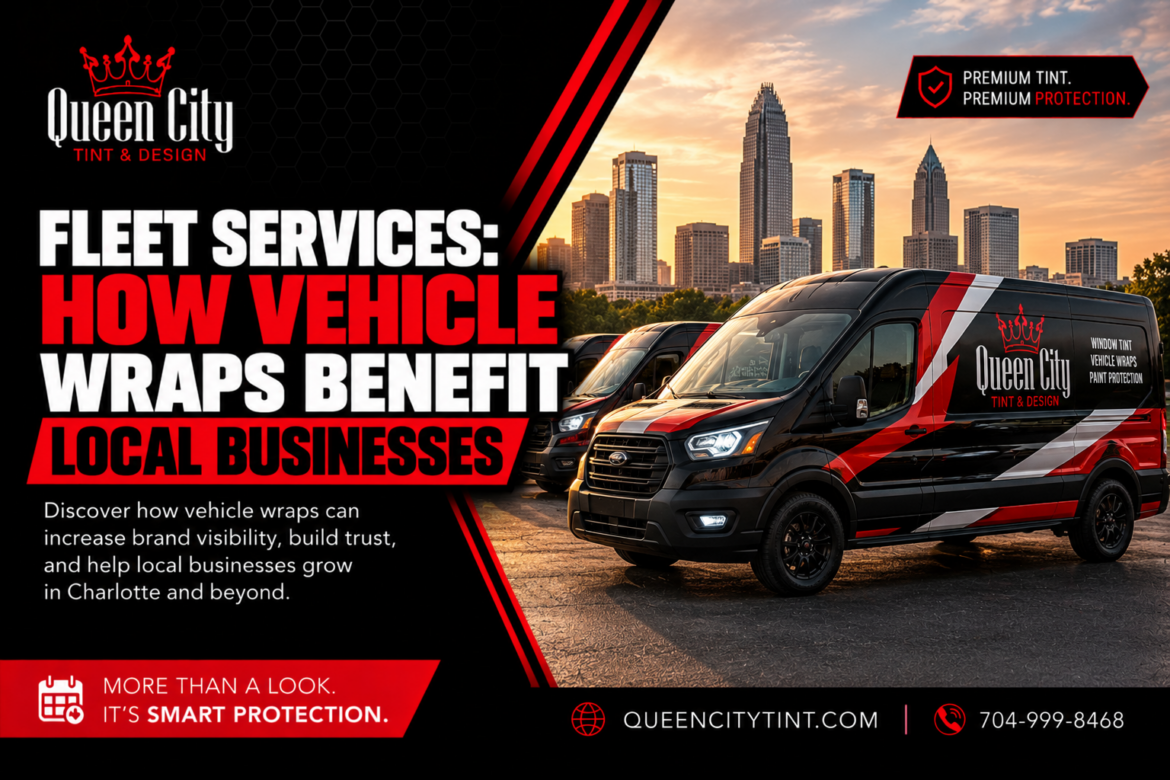
Fleet Services: How Vehicle Wraps Benefit Local Businesses
In a competitive marketplace, standing out is not just an advantage, it’s a necessity. For local businesses dependent on transportation, fleet vehicles are often the most visible extension of their brand. Yet, many companies are missing a powerful opportunity to transform these assets into moving advertisements.
At Queen City Tint, we’ve seen firsthand how professionally designed vehicle wraps can become the secret weapon for local businesses looking to amplify their brand presence, capture attention, and drive growth.
This article explores how vehicle wraps, as part of fleet services, bring real benefits to local companies. We’ll cover everything from brand exposure and cost efficiency to protection and professionalism. Whether your fleet consists of two cars or twenty vans, the right vehicle wrap strategy can make a dramatic impact on your business.
Maximizing Brand Visibility
The roads are crowded with potential customers, but capturing their interest is a unique challenge. Vehicle wraps turn traffic into opportunity. When your fleet vehicles are covered with eye-catching graphics and clear branding, every trip becomes a chance to showcase your business to hundreds, sometimes thousands, of viewers each day.
Unlike static signs or billboards, wrapped vehicles reach people where they live, work, and commute. Branding that is bold, creative, and memorably displayed on your vehicles builds recognition rapidly.
Customers are much more likely to remember your business if they see your logo and messaging repeatedly as they drive around town. Unlike fleeting digital ads, a wrapped vehicle makes a personal, tangible impression that can’t be clicked away or blocked by a filter.
Cost-Effective Advertising
Traditional advertising can eat up marketing budgets quickly, especially for small local businesses. Think about the recurring expenses of online ad campaigns, print media, or billboard rentals.
Now compare that to the one-time investment of a vehicle wrap, which typically lasts several years and provides a consistent, uninterrupted advertising presence. Vehicle wraps represent a highly cost-effective method for getting your company’s message in front of as many eyes as possible, every single day.
The “cost per impression” for vehicle wraps steadily goes down over time, making them one of the most affordable outdoor advertising strategies for local businesses. The return on investment is substantial because your fleet never stops promoting your brand.
Protection for Your Vehicles
Business owners understand that maintaining their fleet is not just about appearance, it’s about minimizing costs over the lifespan of their vehicles. High-quality vinyl wraps protect original paintwork from sun damage, chips, minor abrasions, and harsh weather conditions. This protective layer helps retain resale value and ensures vehicles always look fresh and well cared for.
If you decide to update your branding or change your promotional message, removing (or updating) a wrap causes no damage to the underlying paint. In fact, a well-maintained wrapped vehicle comes out with the same or better resale value compared to one that has been exposed to years of unprotected use.
Building Professionalism and Trust
A wrapped fleet instantly communicates professionalism. Customers notice details, and nothing signals organization and reliability like consistently branded service vehicles. When your trucks or vans arrive at a job site displaying your business identity, customers feel a greater sense of trust and recognition.
This professionalism not only impresses your clients, but also helps strengthen your reputation in the community. Well-branded vehicles show that you are serious about your business and your presence in the marketplace. As a local company, this perception can set you apart from larger, faceless competitors.
Versatility and Customization
Vehicle wraps offer unmatched flexibility in design and messaging. From subtle logos on car doors to full-coverage graphics on large vans, wraps can be tailored to fit any style, message, or promotional campaign. Updates can be made to highlight seasonal offers, new services, or company milestones, without the headaches of repainting or dealing with temporary signage.
The design process is collaborative, allowing you to work with experienced wrap designers to ensure your company’s branding remains clear, readable, and impactful. At Queen City Tint, we ensure that our wraps are meticulously installed for a seamless look, free from bubbles, wrinkles, or misalignments.
Eco-Friendly and Reversible
Modern vehicle wraps use environmentally friendly materials and can be removed cleanly when needed. This allows for flexibility in marketing and ensures you can change or upgrade your advertising approach without contributing to unnecessary waste or damage. For businesses prioritizing sustainability, this is an added benefit that aligns with modern values and customer expectations.
Frequently Asked Questions
How long does a vehicle wrap typically last?
A professional vehicle wrap can last five to seven years when cared for properly. Longevity depends on factors like sun exposure, driving conditions, and cleaning practices.
Will a wrap damage my vehicle’s paint?
No, quality vinyl wraps protect the paint underneath. In fact, they help prevent chips and fading. When installed and removed by professionals, there is no damage to the original finish.
Can I wrap leased vehicles?
Yes, most leased vehicles can be wrapped, but it’s best to confirm with your leasing agent first. Because wraps are removable, they offer a non-permanent way to brand your fleet without violating lease agreements.
What kind of designs work best for vehicle wraps?
The most effective wraps use bold colors, clear logos, and concise messaging. Too much information can clutter the design. Working with expert designers will ensure your wrap is legible and memorable at a glance.
Conclusion
Vehicle wraps offer local businesses a powerful, flexible, and cost-effective marketing strategy. By turning your fleet into rolling billboards, you benefit from increased brand visibility, long-term advertising savings, and an enhanced company image.
In the dynamic world of local business, wrapped vehicles are not just a cosmetic upgrade, they are a strategic investment that pays dividends with every mile driven. If you are ready to bring your brand to the streets and experience the benefits of fleet wraps firsthand, Queen City Tint is here to guide you through every step.

 German
  English